Or maybe you aren’t so fond of them as they chow down in your garden. But you have to admit, that little streak of energy is one of the cutest and overlooked wild neighbors in our mountain region. But few of us know just how remarkable these tiny creatures really are. So let’s find out.
Western North Carolina is prime chipmunk country. Our region's forests give chipmunks everything they need to thrive with rich and compact earth, perfect for building the underground homes chipmunks depend on to survive. As the smallest member of the squirrel family, they’re truly a creature of the mountains.
Here’s something most people never think about. That little chipmunk, weighing about three ounces, is actually a serious architect and engineer. Beneath a small entry hole no bigger than two inches across, a chipmunk digs tunnels that can reach up to three feet deep and thirty feet long. The burrow includes separate rooms for sleeping, storing food, and even, some scientists believe, a bathroom chamber. Just like the groundhog!
When digging its tunnels, the chipmunk carries dirt in its cheek pouches away from the entrance so predators can’t find the front door. You could walk right over a chipmunk burrow and never know it was there.
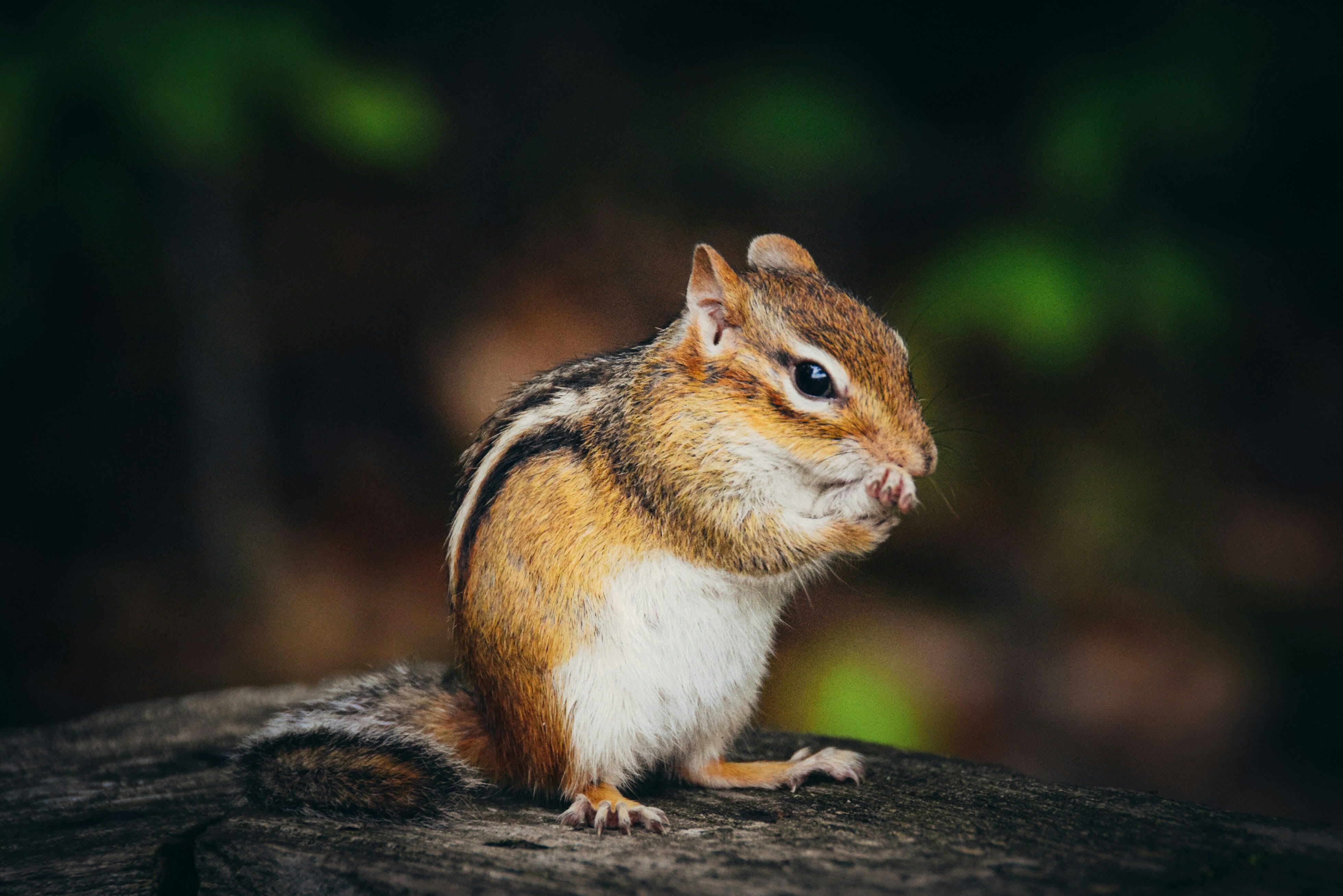
Speaking of those cheek pouches, here’s another cool fact. A chipmunk's cheek pouches can stretch to three times the size of its own head. Fur-lined on the inside, they work like tiny backpacks, letting the chipmunk carry a massive load of nuts and seeds in a single trip. One chipmunk can gather up to 165 acorns in a day and store thousands of nuts in its burrow. I always wonder who sits and counts those acorns.
Speaking of those cheek pouches, here’s another cool fact. A chipmunk's cheek pouches can stretch to three times the size of its own head. Fur-lined on the inside, they work like tiny backpacks, letting the chipmunk carry a massive load of nuts and seeds in a single trip. One chipmunk can gather up to 165 acorns in a day and store thousands of nuts in its burrow. I always wonder who sits and counts those acorns.
You might assume they hibernate the way bears do, sleeping straight through until spring. Nope. During a state called torpor, a chipmunk's heart rate can drop from around 350 beats per minute down to just four, and its body temperature can fall from about 94 degrees to around 40 degrees. And unlike a bear, the chipmunk wakes up periodically to snack on its stockpile.
But even in the summer months, chipmunks sleep up to 15 hours at a time and mostly at night since they forage during the day. Think about the energy they consume gathering all those nuts. They also eat fruit, mushrooms, insects, and just about anything, making them omnivores.
Mostly loners, they interact with the opposite sex only to mate twice a year. But they still have a social life built entirely around sound. By producing chips, trills, and soft repeating calls, they announce predators and let others know a territory is taken. Those sharp chirps you might hear are not random noise. The chipmunk is warning neighbors, defending its home, and competing for mates, all through a vocabulary of calls.
So why is a chipmunk striped? Well, the five dark stripes break up the shape of its body, making it harder for predators to spot them among leaves and shadows. Their camouflage can mean the difference between life and death when hawks, foxes, and other hunters are nearby.
Chipmunks also play an important role in keeping forests healthy. When they collect and store nuts, they sometimes bury them outside their burrow as a safety precaution in case an intruder gets in their burrow. Then they forget where they are buried. Those forgotten nuts grow into new plants and trees, making chipmunks quiet but powerful partners in reseeding our forests.
And since chipmunks only live 2-3 years in the wild, when one dies, a younger one will move into their burrow. Saves a lot of work!
Next time you walk in the woods or just look out your back door, see if you can spot these busy animals. You might see one pause with food stuffed in its cheeks or hear its sharp call from a nearby log. Chipmunks remind us that even the smallest creatures can be full of energy, clever ideas, and important work.